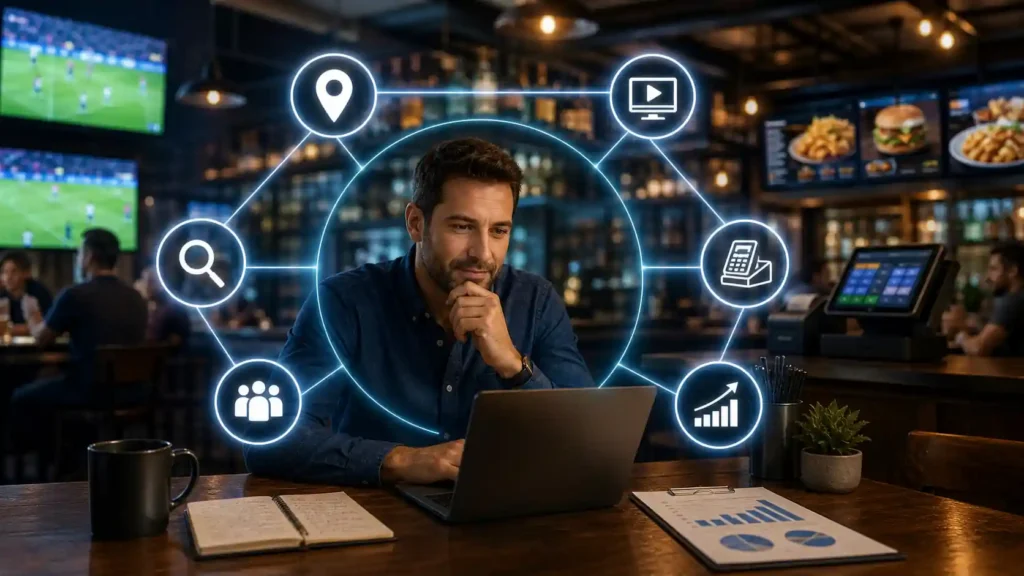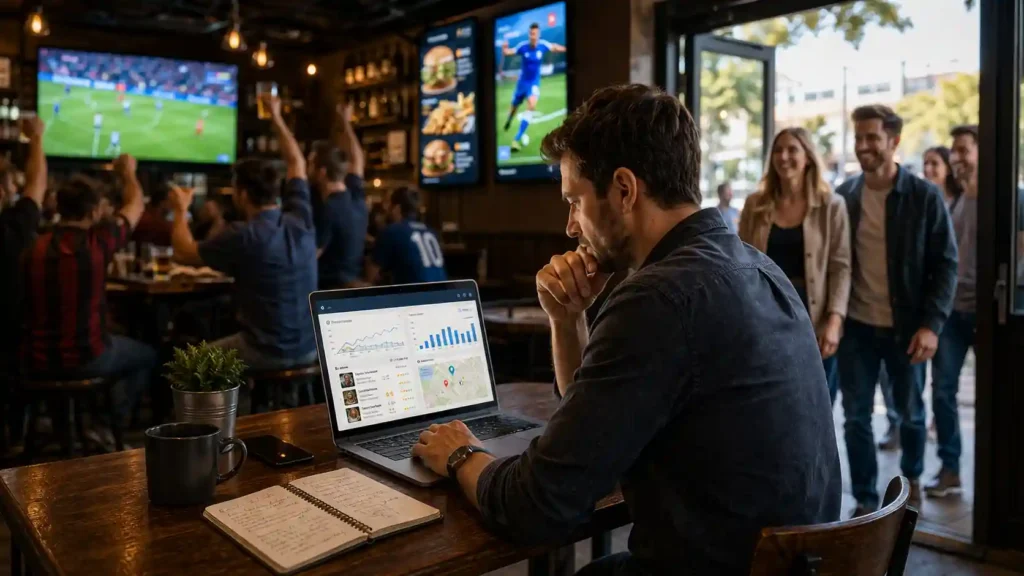
Managing one venue is hard enough. Managing several venues creates a different level of complexity.
Each location has its own opening hours, staff, products, screens, menus, events, offers and local needs. At the same time, the group needs brand consistency, operational control, reporting, permissions and a clear way to promote across every site. A group cannot scale properly if every location manages listings, POS, screens and promotions in separate disconnected systems — the result is duplicated work, inconsistent information and missed commercial opportunities.
What Is Multi-Location Venue Management?
Multi-location venue management is the process of controlling and supporting multiple physical venues from a clearer operational and promotional structure. This may apply to restaurant groups, sports-bar groups, hotel operators, pub groups, entertainment venues, retail chains or franchise-style businesses. A multi-location operator needs to manage shared brand standards while allowing each venue to reflect its own local details — listings, opening hours, menus, POS, staff, screens, offers, events and reporting.
Why Multi-Location Operators Struggle With Disconnected Tools
Disconnected tools create problems at scale. One location may update its opening hours while another does not. One venue may show outdated screen content. A hotel group may have internal outlets promoted inconsistently. A sports-bar group may miss fixture-led opportunities because each venue handles promotion manually. The problem is not effort — it is structure. Without a connected system every location becomes its own island, making reporting harder, campaign control weaker and brand consistency more fragile.
Central Control With Local Flexibility
Multi-location operators need both central control and local flexibility. Central control means managing brand-level assets, templates, permissions, reporting, campaign rules and shared information. Local flexibility means each venue can show accurate location-specific details — opening hours, local offers, events, sports shown, menu variations and local customer information. Too much central control makes local pages feel generic. Too much local freedom creates inconsistency. The best system balances both.
Multi-Location Listings and Discovery
Inconsistent listings across locations damage customer trust and weaken search visibility. Each listing should be accurate, structured and connected to the wider brand. Restaurant groups may need food discovery through GreatFoodPlaces. Sports-bar groups may need SportsBarz and SportsFixtures. Hotel operators may need internal venue visibility. Each location should appear in the right discovery journeys without rebuilding everything manually.
Multi-Location POS Control
POS control becomes more important as a group grows. A single venue can manage products manually. A group needs better structure — location-level permissions, group reporting, product controls, staff roles and dashboards. HozPOS can support the operational layer through premium controls. The group may need to compare performance between locations, manage product changes and understand sales activity across sites without trapping every location in separate workflows.
Multi-Location Digital Signage
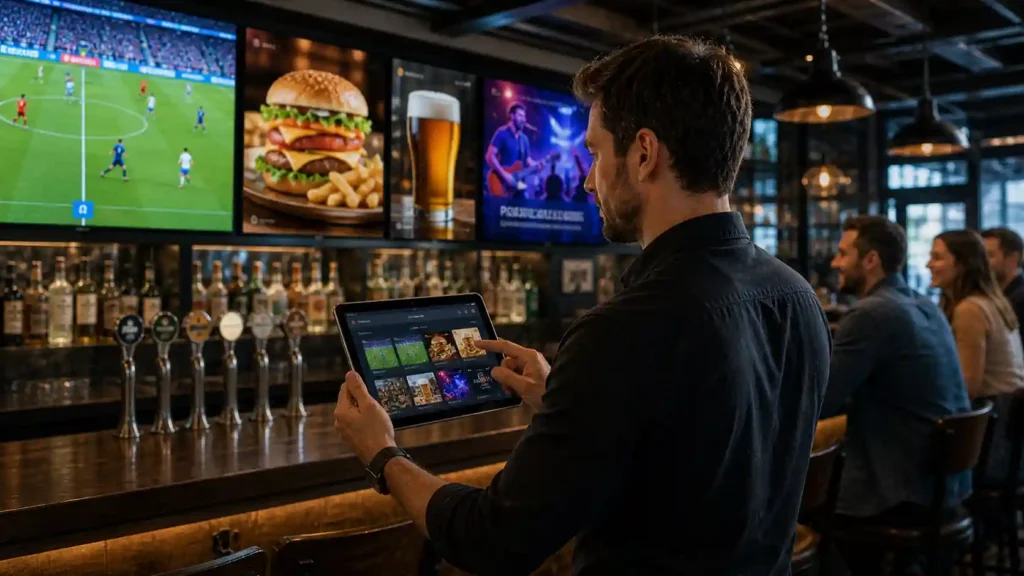
Digital signage becomes powerful at group level. A restaurant group may want to run a seasonal campaign across every location. A sports-bar group may want to promote major fixtures at selected venues. A hotel group may want shared templates for guest information but local content for each property. UltraDisplayAds can support this screen-promotion layer with shared templates, location-specific schedules, approval workflows and campaign reporting.
Local Promotion Across Multiple Sites
Every location has local needs — one venue running a food offer, another showing a major match, another hosting a pool league. A good multi-location system allows local promotion without losing brand control. Different locations can use different Shozzle brand layers depending on their offer. A sports-led site can use SportsBarz. A restaurant-led site can use GreatFoodPlaces. A screen-heavy site can use UltraDisplayAds. A community venue can use PubLeagues.
Hotel and Resort Multi-Outlet Management
Hotels and resorts contain several internal venues — restaurant, bar, lounge, spa, pool area, event space and retail area. Each outlet needs visibility and promotion, but the hotel also needs central control. Shozzle can structure those internal venues as part of the wider property. Screens promote guest services. GreatFoodPlaces supports restaurant discovery. SportsBarz supports hotel bars showing sport. HozPOS supports operations.
Permissions and Reporting
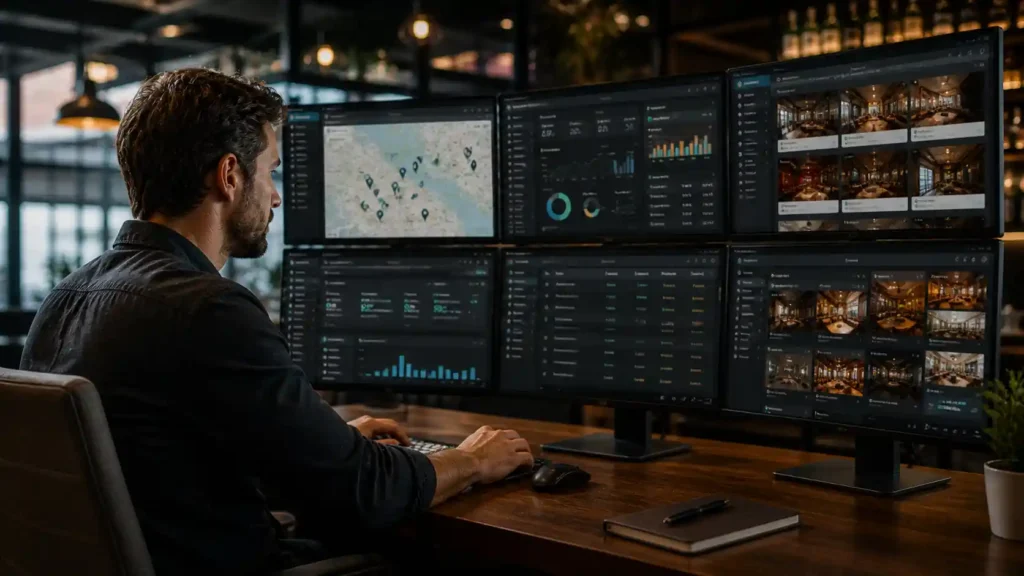
Permissions matter more with every additional location — owner access, regional manager access, venue manager access, staff access and marketing access. Not everyone should be able to change everything. Good permissions reduce mistakes and protect brand control. Reporting is equally important — which locations are active, which listings need updates, which screens are running content and which campaigns are live. Without reporting, the operator depends on manual checking and guesswork.
Common Multi-Location Mistakes
Letting every location build its own process. Using disconnected tools for listings, POS, screens and promotions. Not defining permissions. Ignoring local flexibility. Failing to standardise brand assets. Not creating a rollout plan. Treating multi-location control as an afterthought. These mistakes become more expensive as the group grows.
A Practical Rollout Plan
Start with a pilot group of venues. Structure the venue profiles. Connect the most relevant brand layers. Test screen content, POS tools or discovery pages. Review gaps. Then expand. Shozzle’s free-first model supports this because a group can start with a limited rollout before moving into premium controls — reducing risk and building a repeatable process.
Groups Need Control Without Killing Local Relevance
Multi-location venue management is about balance. The group needs control, consistency and reporting. Each location still needs accurate local information, relevant promotion and flexibility. Disconnected tools make that harder. A connected ecosystem makes it manageable. Shozzle helps venue groups connect listings, POS, screens, discovery and promotion across multiple sites — less duplication, better visibility, stronger control and a clearer path to growth.